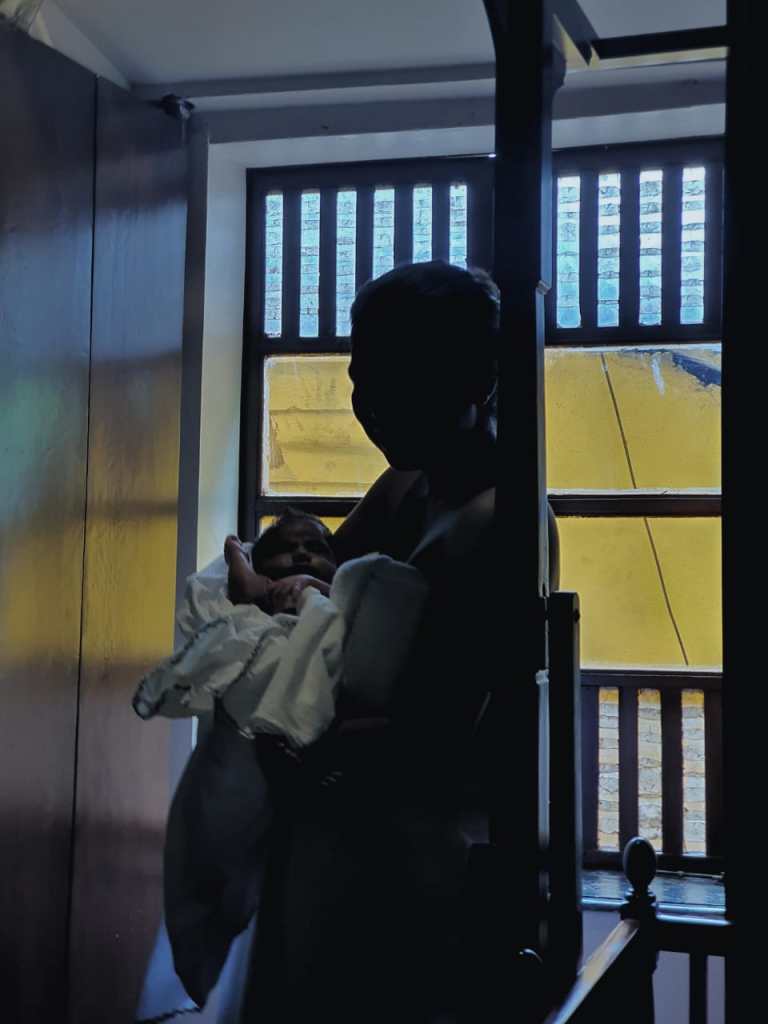
When Shruthi* (Names changed to ensure anonymity) walked into my OPD, i could see she longed to have another baby. She lost her five year old last year, in a tragic accident. It didn’t help that she was nearing 40, and time isn’t the kindest to us women. Her previous pregnancy, completely uneventful, did nothing to prepare her for her troubling journey post-partum. Constant anxiety about a baby born a little too early, breast milk that just wouldn’t come in, a thousand customs and opinions forced onto her all culminated in severe depression. She pushed it away, until she found herself contemplating flinging herself and her baby off her fourth floor balcony. That was her wake up call, and she got the professional and emotional help she needed.
She could not (and her family would not let her) risk going through that again.
On the other end of the spectrum is Drishya. Excited and completely giddy with joy when she left the hospital with her firstborn, I was surprised to get a call from her frantic husband two days later. He had left Drishya and the baby alone for all of fifteen minutes for a quick store run, and come home to find a crabby baby and a completely inconsolable wife. After a few conversations and a few days had passed, Drishya was back to her normal self, albeit a little more sleep deprived than usual.
Shruti was ultimately diagnosed with severe post partum depression, while Drishya had a mild case of the baby blues. Either one of these conditions is Not a character flaw, neither are they a result of innate weakness. They are, as the Mayo clinic beautifully puts it, complications of giving birth. The whole process of making a little human, pushing them out into the world and caring for them is not easy. It isn’t meant to be. The process wreaks havoc on a woman’s biology, and messes up her hormones. The brain undergoes structural remodelling, changes that last upto 2 years post delivery. Some scientists believe this eases the transition to motherhood. All this can leave a new mum vulnerable, and tip some women into the abyss.
Experts have recognised the role other factors play in a new mum’s mental health – sociocultural factors, economical conditions, and relationship conflicts. Interestingly enough, a study showed that these factors may play an even bigger role than biology. A few examples from my practice – the woman who cried in disbelief when her fourth girl was born, sure to be immediately evicted from her home. The woman whose in-laws refused to let her formula feed, despite her milk being woefully inadequate. The woman whose marriage fell apart due to infidelity a few days after her baby was born.
Dr. Joraisa DaCosta, a practising psychiatrist, gives us her take. “Motherhood is often represented in an unrealistic and idealised manner on social media, in magazines or even as myths passed on by well meaning family members,” she says. “These myths can put enormous pressure on new mothers and can result in feelings of inadequacy and failure. It is helpful to remember that these myths are often very different from reality.”
Mental health experts divide post-partum issues into three major categories: Baby blues, post partum depression and post partum psychosis.
Baby blues
60 – 80% of mothers will experience the baby blues. It begins about 3 – 5 days after delivery and is distinguished by sudden mood swings, unexplained weeping, irritability, impatience, lack of sleep, crying spells, anxiety, loneliness and a feeling of vulnerability. It subsides without need for medication. Continuous support and education are all that are needed for the mom to bounce back. It is imperative to ensure that moms with baby blues are on the road to recovery. This is because 20% of them progress to a severe form of depression, PPD.
Post partum depression (PPD)
PPD typically appears within 4 – 6 weeks, but may takes months to appear. Women with PPD might not confide in anyone, and family members play an important role identifying it. Symptoms may mimic those of baby blues – in a much more severe form, preventing the woman from even completing daily simple life tasks. She may completely lose interest in food, feel lethargic and teary all the time. Many start to neglect their newborn, with irrational thoughts of harming the little one. Suicidal thoughts may start to take over. These women need psychiatric evaluation and treatment.
Post partum psychosis
This is a severe form of psychiatric illness, where a woman can completely lose touch with reality. She may suffer from auditory or visual hallucinations and behave in an irrational manner. It is imperative to get these women urgent psychiatric help.
Jenny looked at the little wriggling thing being presented to her. Who is this little person? What do I do with her? The nurse put her to Jenny’s breast. As she struggled to feed the bawling thing, the nurse snapped, “What are you doing?? You’re the Mother. Comfort her!”
All through pregnancy, people fawn over you. They tell you you’re glowing, try to guess the sex of your kid, give you their take on delivery. Nobody prepares you for the sheer ugliness of the post partum. In any other situation, going through a major procedure- with a raw wound and heavy bleeding merits you some kind of rest. In this case not only is sleep a luxury, but the entire responsibility of this tiny little being is thrust upon you. The sheer loneliness is overwhelming. Where despite being surrounded by a million people, you are the only one who can feed this child, who is expected to comfort it.
People (most of whom aren’t mothers) seem to believe that motherhood is innate. Every woman Must have the motherly instinct, and those who give birth must automatically know what to do. And some women do. Unfortunately, many others (like Jenny) will tell you that they had to learn – learn to breastfeed, how to get he baby to latch correctly, how to change a diaper, how to hold their baby, how to comfort it. A few sleepless nights; cracked, bleeding nipples and many many frustrated tears later – it becomes second nature.
They say it takes a village to raise a child – and it really does. A village of kindness, a village of understanding. Someone to advise and not domineer, another to cajole without judgement; someone to say, hey. You’re doing a great job. That helplessness you feel – I felt it too – and trust me. It goes away.
Before i say goodbye, here are a couple of do’s and don’t’s to help moms prevent or battle the baby blues, taken from NHS guidance.
Do’s
Do make sure you have treatment for depression in pregnancy. Remember that anxiety may start right in the antenatal period, and do seek the help you need. This is what your doctor is for. Try to be open and honest about your feelings.
Do disclose any past history of depression or mental health problems to your doctor. This helps pick up signs of early depression better.
Do take some time for yourself. Motherhood can be one giant guilt trip, and there is absolutely no harm in taking a little time each day, just to recharge yourself. Leave dad in charge and take a walk on the beach, a run to the grocery store, even a little drive.
Do rest and sleep whenever you can. Ask your partner to night feed at least once so you get a few solid hours of sleep. If you are uncomfortable with formula, you can express breast milk and store it.
Do learn as much as you can about the postpartum while pregnant. Pepper your doctor or new-mom friends with questions. Be informed, and be firm in the choices you make for yourself and your baby. Choose the customs you want to follow and say a firm no if you are uncomfortable with others.
Do find someone you can talk to. Other new moms are usually a great source of comfort. Try to get in some alone time with just you and your partner.
Do eat regularly and healthy, even if you don’t feel up to it. Make time to exercise.
Donts
Don’t blame yourself, your partner or your close relatives. Remember everyone is stressed out and just trying to help. Life is hard right now and irritability and tiredness can lead to arguments. Try to sit down and talk out issues so that your relationship isn’t weak where it needs to be the strongest.
Dont be frightened by your diagnosis. Most women with PPD will get better without medication in 3 – 6 months. Your family may be more understanding if they are aware of the diagnosis.
Don’t hide or ignore the symptoms. Remember, the faster you get help, the faster you will recover. 1 in 4 mothers with PND are still depressed when their child is 1 year old. This is agonising, ruining the joy of new motherhood. It may strain relationships with your partner and render you incapable of taking care of your baby. The longer it lasts, the more likely your baby is to end up with developmental and behavioural issues.
Don’t stop antidepressant medication in pregnancy/ post partum without medical advice.
In the end what pulled Drishya from her funk was her realising she didn’t need to be superwoman. She leaned on her mum a bit more, had regular conversations with me (her doctor), found a great new group of mommy friends, made a little time for herself and her husband. She fell in love with her baby, her new body, her husband all over again. And the whole terrible, beautiful, tiring, wonderful package that is Motherhood.
As we sign off, remember in the words of Albus Dumbledore: Help is Always given to those who ask for it.

 For Women, For Health.